Why Your Film Presets Feel Fake (And How to Fix It)
The Problem With Our Film Simulations
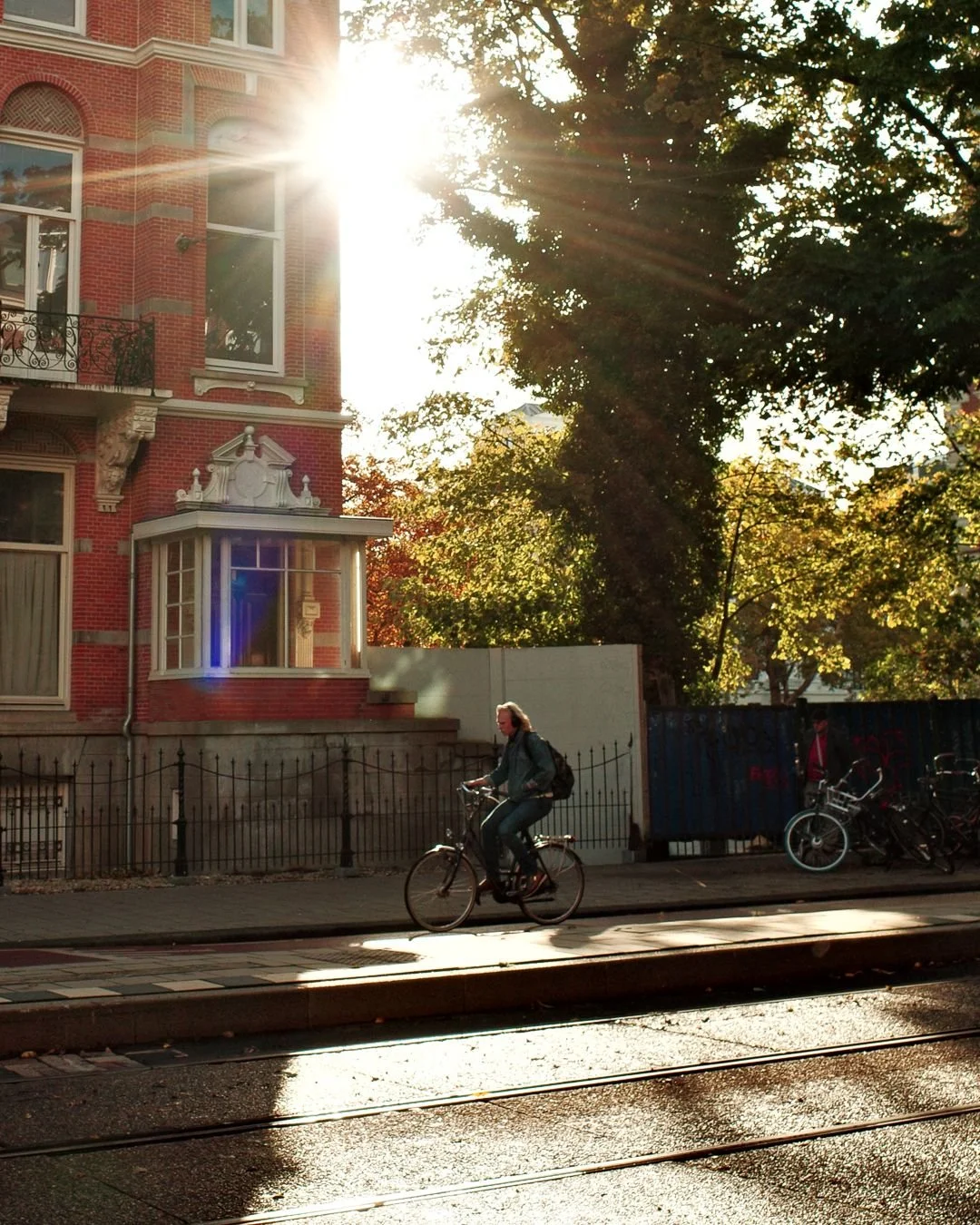
We've all been there. We download a pack of film presets, apply them to our photos, tweak the colors until they match that nostalgic look we're chasing, and yet something still feels off. The image looks good on paper, but it lacks soul. It's like wearing a really good costume with no actor inside. The colors are right, the grain is there, but the magic? Nowhere to be found.
For months, we chased that perfect film aesthetic. We adjusted curves, added grain overlays, and studied the color science of Kodak Portra and Fuji stocks. But the results always felt hollow. What if the problem isn't the preset itself? What if the secret to creating images that feel real has nothing to do with the final look and everything to do with the psychology behind how we capture them?
Understanding What "Real" Actually Means
Before we dive deeper, we need to get on the same page about something fundamental. When we say a photo feels real, what are we actually talking about? This isn't about creating a perfect copy of reality. The way our brain judges authenticity comes down to two key factors: the tiny details we perceive and whether the image matches what we unconsciously know about how the world works.
First, let's talk about details. Think about the tangible elements that signal something is physical and present in our world. The texture of weathered skin, the way afternoon light catches dust particles on a table, the small imperfections our brains have been trained to recognize from birth. A close-up photograph of a weathered hand, with all its tiny creases and wrinkles visible, triggers a much stronger feeling of reality than a perfectly smooth, over-processed portrait. Our brain registers it as something we could reach out and touch.
The second part is about cognitive alignment. Our brain is essentially a pattern recognition machine that has spent our entire lives learning how the physical world operates. We know instinctively how gravity works, how light falls and bounces, how objects interact with each other, and even how human faces should look in different lighting conditions. Remember the Polar Express movie and how unsettling those characters felt? That's the uncanny valley effect, where something is almost right but just off enough to trigger our internal alarm systems.
When a photograph contains visual cues that line up with these deep, unconscious models we've built in our brains, we accept it as believable and real. Film photography, because it was a physical and chemical process involving light interacting with silver halide crystals, was exceptionally good at delivering these cues in a way that modern digital editing sometimes struggles with. Even when a film image has been scanned and digitized, it retains certain qualities that our brain reads as authentic.
The realness of film is actually an entire experience that starts way before we see the final picture.
The Psychology of Constraint and Commitment
Here's probably the biggest piece of the puzzle that most people overlook: the psychology of constraint. Capturing images on film was fundamentally an exercise in limitations. A standard roll of 35mm film gave us either 24 or 36 exposures. That was it. Every single click of the shutter had a real, tangible cost attached to it. This wasn't just about the money spent on film and development, it was a psychological shift in how we approached photography.
With a limited number of frames available, we couldn't adopt the spray and pray mentality that digital photography often encourages. We had to be deliberate. We had to be intentional. This constraint forced a fundamental change in our behavior as photographers. We learned to wait patiently, to watch our subjects carefully, and to anticipate that one decisive moment rather than hoping to capture it by taking hundreds of frames.
We became hunters rather than trawlers. We internalized the quality of light, metered carefully with intention, and composed our frames with a sense of finality. There was no instant feedback on an LCD screen to check. There was no immediate second chance if we got the exposure slightly wrong. The entire process of slowing down and committing to a single moment embedded a certain weight and consideration into the frame itself.
The final photograph wasn't just a picture. It was a decision. It was a commitment. And somehow, our brain can sense that when we look at the image.
These limitations, when understood and applied properly, can transform into habits that make us better photographers overall, regardless of whether we're working with film or digital cameras. The discipline of constraint is a skill that translates across all creative mediums.
The Tactile Nature of Film and Texture
Next, we need to talk about the physical, tactile nature of the medium itself. That feeling of realness we're chasing depends heavily on texture and micro-details that tell our brain something is solid, material, and exists in physical space. Film, as a physical object capturing light through an optical and chemical process, excelled at providing this quality.
Every film stock had its own unique structure of silver halide crystals scattered throughout the emulsion. That's what we perceive as grain in film photographs. But unlike a digital grain overlay, which tends to be a uniform texture applied evenly across an entire image, real film grain is chaotic and organic. It clumps up differently in the mid-tones, gets finer in the highlights, and responds to the actual light in the scene. It's not just sitting on top of the image, it's actually interacting with the photograph at a fundamental level, providing micro-texture that gives surfaces a quality we can almost feel.
On top of that, older lenses weren't optically perfect by modern standards. They produced what we might call artifacts or character, things like halation, which is that soft glow we see around bright highlights, and their sharpness would often fall off towards the edges of the frame even more dramatically than what we see with current lenses. But here's the thing: these flaws weren't necessarily flaws at all. They were actually little visual cues that give our brain a sense of realness.
Halation, for instance, creates that soft glow around bright light sources that feels similar to the way our own eyes perceive intense lights. Our eyes aren't perfect optical instruments either. We get flares, we squint, we see halos around bright objects. When a photograph replicates some of these human visual experiences, it feels more authentic to us.
Those subtle changes in sharpness across the frame help create a better sense of depth and dimensionality. So much of the modern digital photography process is designed specifically to eliminate these imperfections. Noise reduction algorithms scrub away grain, sharpening tools add clinical edge definition, and lens correction profiles flatten out the unique character and optical personality of the glass.
When we overuse these perfection tools, the results are images that are too clean, too perfect, and too statistically regular. Our brain starts reading this excessive perfection as synthetic or clinical. Small, hard to predict variations in texture and tone are actually seen by our brain as signs of authenticity and realness. By scrubbing them all away in our quest for technical perfection, we end up creating something that may be technically flawless but feels wrong on a subconscious level.
There are some tools available that help add these imperfections back in a less standardized, more organic way. One tool that has proven valuable in this regard is Dehancer, which simulates the actual physical and chemical processes of film rather than just applying a look. These tools can help bridge the gap between digital capture and that film feeling we're after.

We're Simulating the Wrong Thing
This brings us to the core problem with most film simulations and presets. They focus on simulating the style and aesthetic of film, but not the process or the conditions under which film photography actually happened. Don't get us wrong, modern film simulation tools are incredibly sophisticated at mimicking the color science, the tonal curves, and the grain structure of specific film stocks. But they're ultimately just a surface treatment.
Applying a nostalgic skin to an image that was created without any of the psychological or physical conditions that made film feel real in the first place creates a disconnect. When we add a film look to an image that hasn't been captured with the deliberate, constrained mindset of film photography, and doesn't have the tactile depth that comes from those silver halide crystals interacting with light, it creates what psychologists call cognitive dissonance.
The image has the right style, which might trigger our nostalgia for film photography, but it misses the perceptual cues that our brain uses to connect it with reality and authenticity. Our brains are wired through millions of years of evolution to understand the physics of the real world. When we look at a photograph that has natural motion blur from a slower shutter speed, or the way focus falls off realistically based on depth of field, our brain mentally simulates being in that space. That mental simulation is what makes an image feel immersive and real.
A preset can give us the color palette of Kodak Portra, but it can't recreate the intentionality that came from having only 36 frames to work with. It can add grain, but that grain won't have the organic, light-interactive quality of real film emulsion. The disconnect between the style and the substance is what leaves us feeling like something is missing.
The Path Back to Creating Real Feeling Images
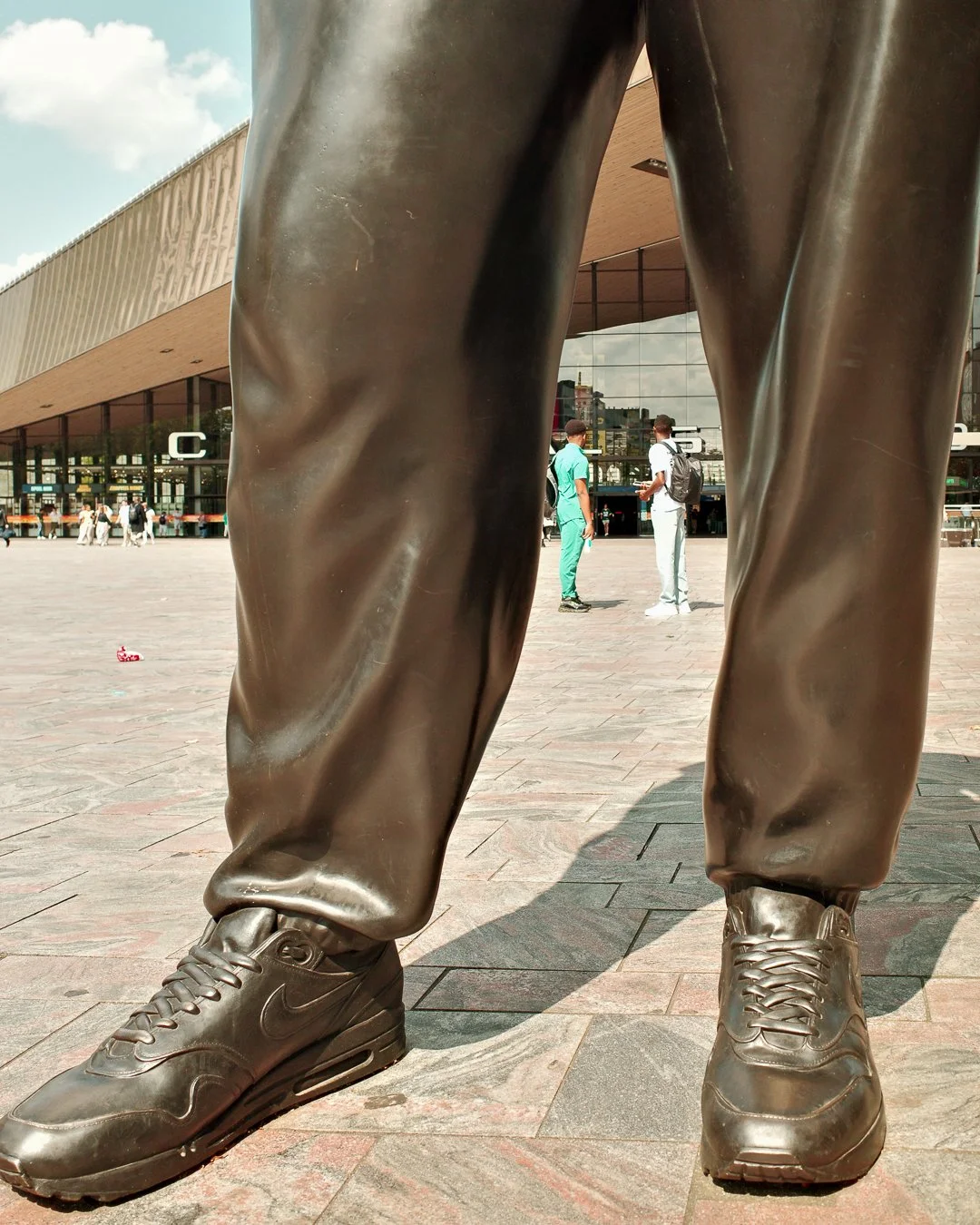
So what does all this mean for us as photographers? If presets alone are a dead end, how do we create images that genuinely feel more real and authentic? The solution requires a shift in how we think about photography and how we approach the act of capturing images. It's about simulating the constraints and conditions that made film photography feel real, not just the aesthetic.
First, we need to embrace limitation intentionally. Give ourselves a creative straightjacket. Try this experiment: go out for a day and tell ourselves we can only capture 36 pictures total. Not 36 keepers, but 36 frames period. If we have a prime lens, use only that focal length because it forces us to move our feet, think more carefully about composition, and commit to our choices. This exercise aims to bring back that sense of intention and weight that's so often missing from a digital workflow where we can take thousands of frames without consequence.
Second, we need to learn to love imperfection. For those of us who tend toward perfectionism, this can be difficult, but it's essential. Turn the sharpening down in camera settings. Be gentle with noise reduction, or skip it entirely. Let digital noise act as a kind of modern grain that adds texture and life to our images. In street photography settings using aperture priority with automatic ISO, consider setting the upper ISO limit much higher than normal. Yes, this brings more visible grain, but it also means the camera is ready to capture moments in almost any lighting condition. The grain becomes part of the authentic feeling rather than something to eliminate.
We can also seek out older vintage lenses that have character built into their optical design. Lenses that produce some flare, that are a little soft around the edges, or that have other qualities that aren't clinically perfect. These optical flaws give our images the perceptual cues our brains are searching for when determining authenticity.
Third, prioritize getting it right in camera rather than relying on extensive post-production. Spend more time working with the available light, waiting for the right moment, and nailing the exposure and composition before pressing the shutter. This doesn't mean post-production isn't important, but when we rely too heavily on sliders and masks to fix or create everything, we lose something in the process. The images that feel most real often required the least manipulation because they were captured with intention and care.
The Real Secret Behind Film's Magic
For years, we've been chasing film aesthetics through digital tools, downloading presets and studying color science. But the realness we've been searching for was never really about the chemical emulsion or the specific color palette of different film stocks. A significant part of what made film photography feel authentic was actually in the weight each frame carried, the limitations we worked within, and the delayed gratification of having to wait days or weeks to see our results.
Film forced us to be better photographers not because of its technical superiority, but because of the discipline it demanded. Every frame mattered. Every decision had consequences. We learned to see light differently, to anticipate moments, and to trust our instincts without the crutch of instant feedback.
The path to creating images that feel real in the digital age isn't about finding the perfect preset or the most accurate film simulation. It's about adopting the mindset and discipline that film photography naturally imposed. It's about working within constraints, embracing imperfection, and being intentional with every frame we capture.
When we combine that approach with our understanding of what makes images feel authentic to our human brains, the tactile textures, the organic imperfections, the natural variations that signal something physical and real, we start creating work that has genuine depth and presence.
The film look we've been chasing was never just a look at all. It was a feeling created by the entire experience of how those images came into existence. And that's something we can recreate, not through presets, but through how we choose to approach our craft.