Fujifilm X100VI Review: Was the Hype Worth It?
After two months of carrying the Fujifilm X100VI through daily life and across international travel, one thing became clear: this camera does not fit neatly into any box. It is not the fastest. It is not the most versatile. And it is definitely not the cheapest compact on the market. But the conversation around whether it lives up to its enormous hype deserves a more honest answer than most reviews offer.
So let us walk through the full journey together, the rocky start, the unexpected turning point, the real-world travel test, and ultimately, a verdict that reflects two months of genuine use rather than a weekend of first impressions.
The Rocky Start Nobody Talks About
Every camera review seems to begin with praise. We are going to start somewhere different: with frustration.
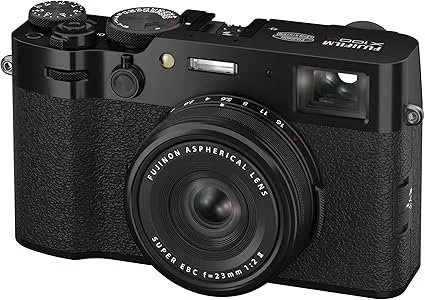
The first few days with the X100VI were genuinely shadowed by friction. Coming from the Ricoh GR, the ergonomics of the Fujifilm felt surprisingly clumsy at first. And to be fair, the Ricoh is not exactly an ergonomic masterpiece either, but it had become deeply familiar. On the Fuji, fingers would accidentally press the front function button, sometimes ruining a frame entirely. They would also creep toward the viewfinder, something that never happened with the Ricoh simply because the Ricoh does not have one.
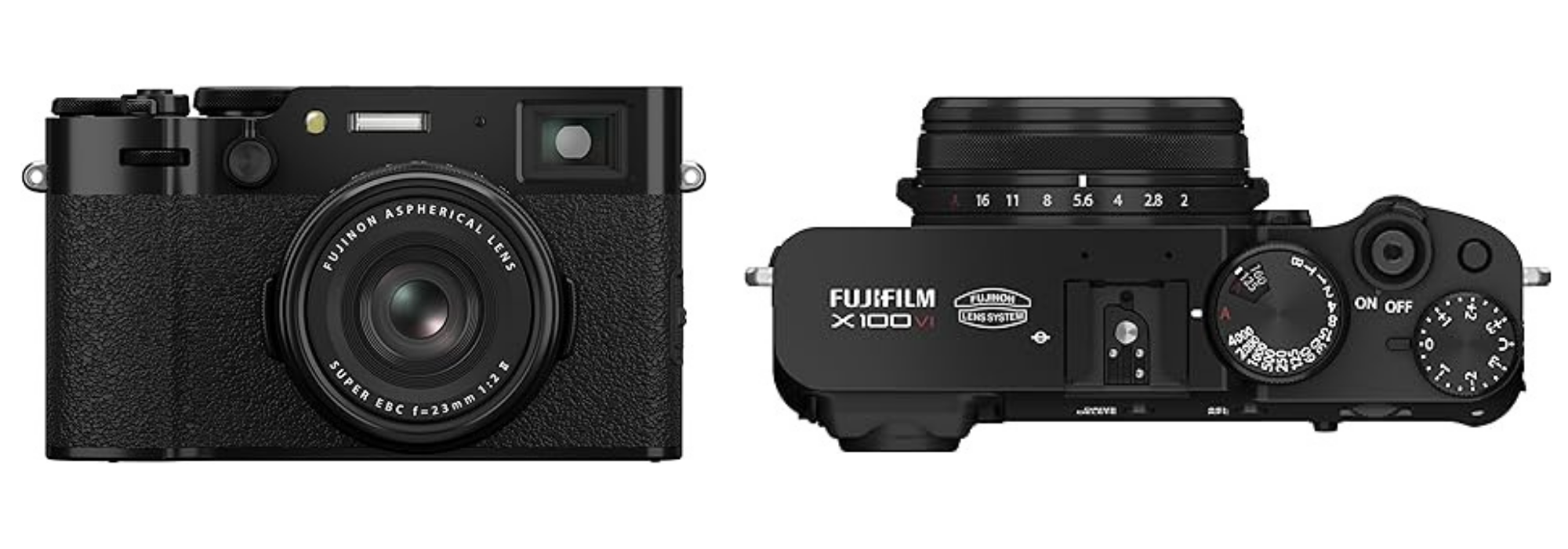
Then there were the control dials. They are celebrated for good reason, but they are also easy to knock out of position during casual handling, especially the exposure compensation dial. More than once, a setting was bumped without realizing it until after the moment had passed.
The biggest obstacle, though, was autofocus. Coming from the Sony a6700, a camera whose AI-powered tracking is genuinely in a different league, the X100VI felt sluggish and inconsistent. Face and eye detection worked sometimes and completely ignored subjects other times. After several days of missed moments, the thought that started creeping in was an uncomfortable one: had this been an expensive mistake?
The Turning Point: Understanding What the Camera Actually Is
The shift did not come from a single revelation. It came gradually, and it came from recognizing a fundamental error in approach.
The X100VI was being treated like a smaller Sony. It was being judged on the same terms: autofocus speed, tracking reliability, technical precision. That framing was wrong. This camera was never designed to compete in those categories. It was built for a completely different experience of photography.
Once that became clear, something changed. Leaning into the physical controls, setting aperture, shutter speed, and ISO through dedicated dials rather than menus, reconnected the process of making photographs to something more tactile and deliberate. It slowed things down in a way that felt less like a limitation and more like an invitation. Is it the most efficient workflow? No. Is it a more engaging one? Absolutely.
The image quality deepened that shift considerably. The 40-megapixel sensor delivers remarkable detail and, crucially for a fixed-lens camera, the ability to crop aggressively without sacrificing resolution. This gives the X100VI a flexibility that cameras like the Ricoh GR3 simply cannot match, where cropping quickly runs into the limits of the sensor.
But the real revelation was the film simulations. Coming from a Sony workflow built almost entirely around RAW files and extended time in Lightroom, seeing the JPEGs straight out of the X100VI was genuinely surprising. The color rendering, the tonal character, the way skin tones and shadows behaved, all of it felt considered and complete without any post-processing. For travel especially, this matters enormously. Nobody wants homework waiting for them when they get home from a trip.
A practical approach that emerged: shooting JPEG plus RAW simultaneously, particularly in black and white. The JPEG delivers the immediate result with the film simulation baked in. The RAW file stays as a backup if a color version is ever needed. It is the best of both worlds without adding meaningful complexity.
The Travel Test: One Camera Barely Left the Room

On a recent trip, both the X100VI and the Sony a6700 with a Sigma 17-40mm lens were packed. The Sigma had been chosen specifically as an all-trip lens, compact enough to live on the camera the entire time. By the end of the first day, the Sony was sitting in the hotel room.
The reason was not image quality. The Sony is arguably the more capable imaging tool in objective terms. The reason was friction, or rather, the absence of it.
The X100VI weighs 521 grams. Carried on a Peak Design Slide sling, it disappeared into the experience of moving through a city. It was always accessible without feeling like a burden. The non-extending lens design contributed to this as well. With the Ricoh GR, there was always a background anxiety about dust working its way into the lens barrel during bag or pocket storage. The Fujifilm eliminates that concern entirely. Small detail, significant reduction in mental overhead.
The in-body image stabilization opened up low-light situations that would have otherwise required a tripod. Fujifilm rates it at up to six stops of compensation, enabling sharp handheld shots at shutter speeds as low as half a second. This is meaningful for interior photography, evening street work, and any situation where carrying additional equipment is not practical.
The built-in four-stop ND filter deserves more attention than it usually receives. Being able to shoot wide open at f/2 in bright sunlight without blowing highlights, and without carrying a separate filter, is the kind of feature that sounds minor until it eliminates an actual problem. The built-in flash rounds this out. While flash is easy to dismiss in a review, the character it adds, particularly in black and white, gives photographs a specific quality that feels intentional rather than corrective.
When placed head to head, the Sony a6700 surpasses the X100VI in autofocus and video performance without question. But the Fujifilm delivers a superior experience of actually making photographs. Those are different things, and which one matters more depends entirely on what someone is actually trying to do.
Who This Camera Is For
After two months, the answer to whether the X100VI is worth it is genuinely complicated, and that complexity is worth respecting.
This is a camera for the hobbyist who wants professional-grade image quality without adding complexity to their life. It is for the professional who needs a second camera for travel or personal projects, something that feels less like an extension of work and more like a reason to be present. It is for anyone who has started to feel disconnected from the process of making photographs and wants a tool that reconnects them to it.
It is also worth being direct about who should skip it.
If primary work depends on tracking fast-moving subjects, whether weddings, sports, or wildlife, the autofocus, while improved over previous X100 versions, remains the camera's most significant weakness. It will frustrate in those situations. If video is a central part of the work, there are better options. The X100VI produces good video, but professionals in that space will want to look at dedicated video-oriented systems.
And if the idea of a single fixed focal length creates anxiety rather than creative constraint, an interchangeable lens system will likely serve better. That is not a criticism of this camera. It is an honest acknowledgment that a fixed lens is a specific philosophy, and not every photographer is ready to commit to it.
The Honest Verdict
Two months in, there is no regret about buying the Fujifilm X100VI. It arrived with enormous hype and, once understood on its own terms, exceeded it.
What makes this camera genuinely valuable is not any single specification. It is the way it changes the relationship between photographer and process. The physical controls create deliberate engagement. The film simulations eliminate a significant portion of post-processing work. The size and weight reduce the friction between intention and execution. Together, these qualities do something that a spec sheet cannot capture: they make photography feel worth doing again.
For anyone sitting on the fence, the honest advice is this. If the idea of slowing down, engaging more physically with a camera, and walking away with images that require minimal processing sounds appealing, the X100VI will likely deliver exactly that. If raw technical performance is the priority, the Sony remains the stronger choice.
Both are legitimate answers. The question is what kind of photographer we are trying to be.
Have the X100VI already? Thinking about making the move? Drop a comment below and share where you are in the decision. The conversation is always more useful than the review.
