Best Cameras for Shy Street Photographers
The honest limitation is size. The X100VI is not truly pocketable, not in any normal pair of jeans anyway. It needs a jacket pocket or a small bag, and it is almost always worn on a strap. That means it is always visible, always a conscious decision to carry. Its approachable looks reduce some anxiety, but it cannot fully disappear the way the next two cameras on our list can. For many introverted photographers, it hits a very satisfying sweet spot. But it is not the top of the discretion scale.
Rank 2: Ricoh GR Series — The Cult Classic Built for Streets
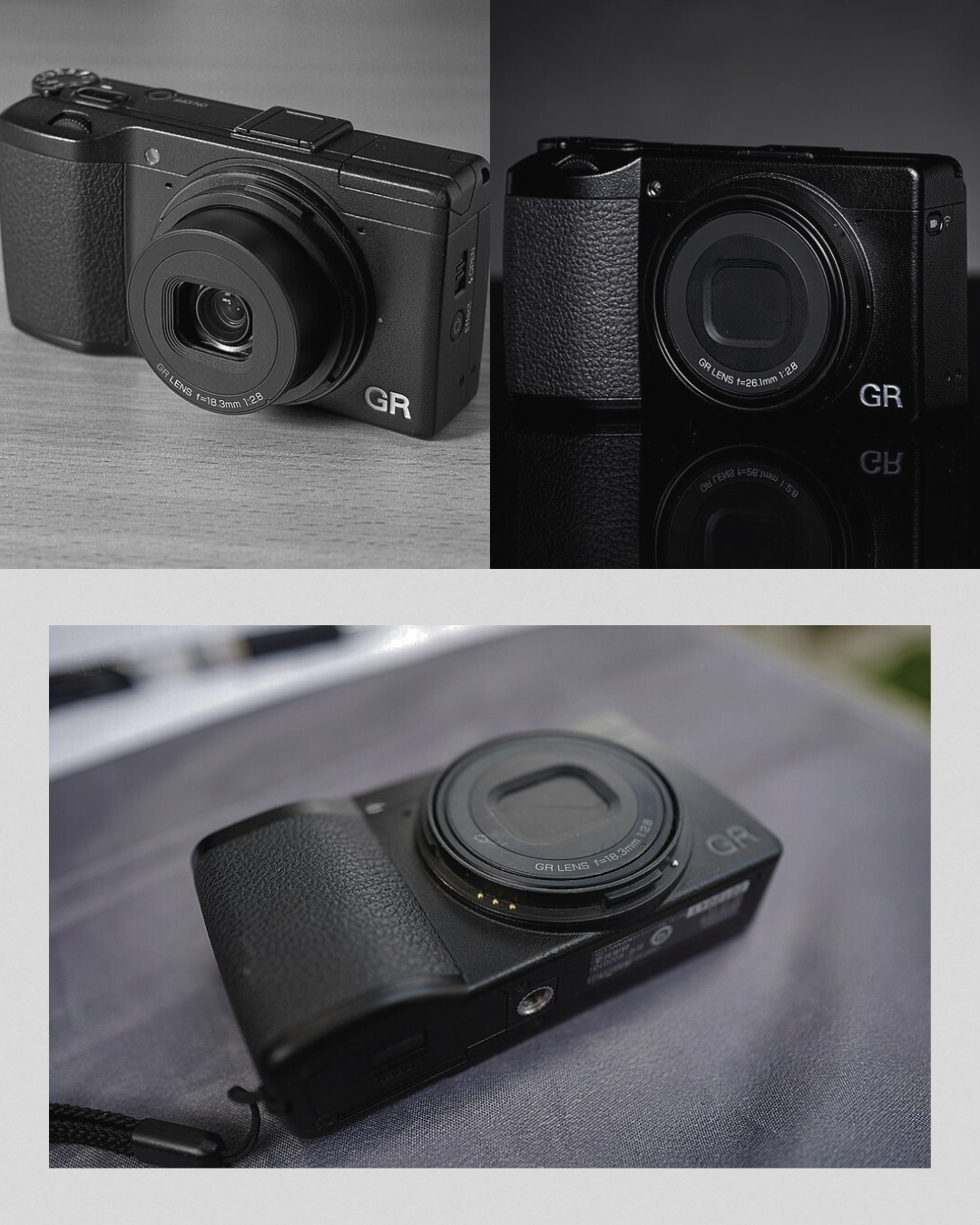
The Ricoh GR series holds a legendary status in the street photography world, and once we understand what it does, it is easy to see why. The GR3, GR3X, GR4, and GR4 Monochrome all share the same fundamental design philosophy: maximum capability in the smallest possible package. And crucially, this package fits in a normal trouser pocket.
This is where we cross a critical threshold. A camera that lives in a pocket is infinitely more discreet than a camera hanging from a strap. There is no permanent signal being broadcast to everyone around us. We can walk through a crowd like anyone else. When a moment appears, we retrieve the camera, capture the frame, and slip it back into the pocket before most people have even registered what happened. For an introverted photographer, this changes the entire experience.
Inside that tiny body sits a full APS-C sensor, the same size found in much larger cameras. The fixed lens is impressively sharp. But the feature that truly sets the Ricoh GR apart for street work is snap focus. This allows us to preset a focus distance, say two meters, and when the shutter is pressed, the camera instantly snaps to that distance with no autofocus delay. No waiting, no hunting, no missed moments. This feature also teaches a valuable creative habit: learning to judge distance by eye and capture frames from the hip, without lifting the camera to the face at all.
The limitations are real but manageable. The fixed lens is not for everyone, and autofocus performance in low light leaves something to be desired compared to more advanced systems. There is no viewfinder, which some photographers will find limiting. But on the introvert-friendly scale, this camera scores a very strong 9.5 out of 10. So what possibly scores higher?
Rank 1: The Smartphone — The Undisputed King of Discretion
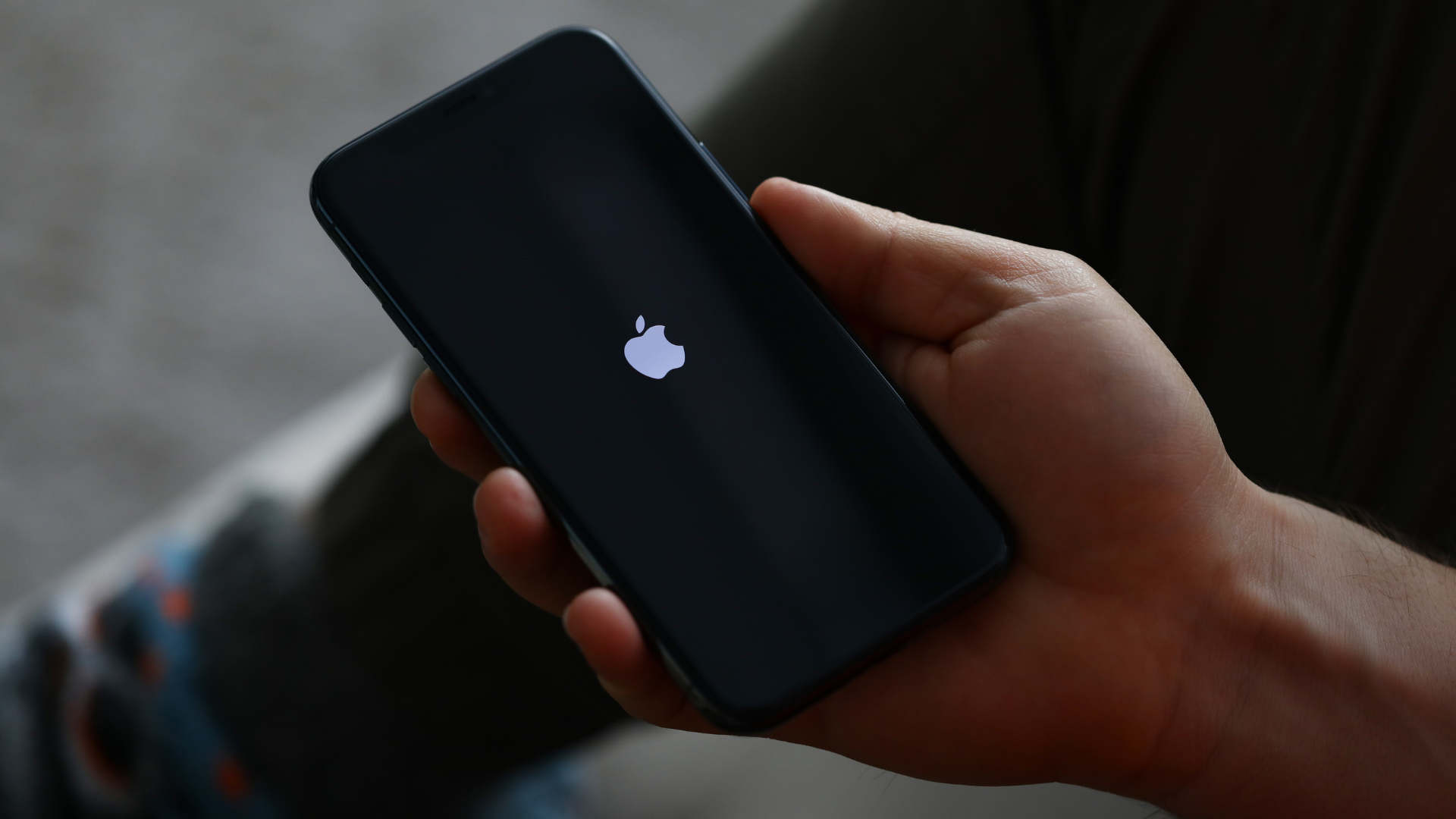
Go ahead and roll your eyes. We understand. But hear this out, because the logic is genuinely hard to argue with.
The entire problem we are trying to solve is the fear of being noticed. We want to blend in. We want to disappear into the environment and capture authentic, unguarded moments. Now consider: what is the one device that every single person on the street is already holding, pointing at things, and staring at without anyone questioning it? The smartphone.
When we stand on a corner and raise a smartphone, nobody thinks photographer. They think texting. They think maps. They think selfie. The social anxiety barrier does not just shrink with a smartphone. It essentially disappears. We become completely invisible in plain sight, which is the ultimate superpower for an introverted street photographer.
The practical benefits extend beyond discretion. Modern smartphones carry genuinely capable cameras. In good light, the image quality is impressive. The autofocus is near-instant. Computational photography handles a lot of the technical heavy lifting automatically. Multiple lenses, wide, ultrawide, and a short telephoto on many models, offer real creative flexibility. And for iPhone users, connecting cable earbuds and pressing the center button on the control module triggers the shutter silently, without even touching the screen.
The trade-offs are real. Image quality in low light or with larger prints will not match a camera with a dedicated sensor. The experience of holding a flat glass rectangle lacks the tactile satisfaction of proper dials and buttons. And for photographers who are drawn to the craft partly because of the physical pleasure of using a well-designed camera, a smartphone can feel like it misses the point.
But this ranking is not about image quality. It is about finding the camera that actually empowers a shy, anxious photographer to go out and create. And by that measure, the one device that is always with us, never raises suspicion, and removes every social barrier wins by a significant margin.
The Real Barrier Was Never the Camera
Here is the honest truth that most gear reviews skip over. The camera is only part of the equation. Research in creative psychology consistently shows that the barriers to creative action are far more often emotional than technical. A study published in the Journal of Experimental Social Psychology found that social anxiety significantly reduces engagement in public creative activities, independent of skill level. The gear we choose either amplifies or reduces that anxiety, but it does not eliminate it entirely.
What the right camera can do is lower the activation energy required to go out and create. A pocketable Ricoh GR means the camera comes along on a walk without a conscious decision. A smartphone means there is never a reason not to capture a moment. A Fujifilm X100VI means the experience of creating is enjoyable enough to override the anxiety.
The goal is to find the camera that makes us want to go out. Because the best camera for street photography is always the one we actually bring with us. Once we have chosen that camera, the next challenge is publishing the work, which comes with its own entirely separate set of fears. But that is a conversation for another time.
Final Thoughts
For introverted photographers, the most liberating realization is this: we do not have to use the biggest, most impressive camera to do meaningful creative work. The Ricoh GR fits in a pocket and disappears. The smartphone never leaves our side. The Fujifilm X100VI makes the experience genuinely enjoyable. Each of these options reduces the friction between us and the creative act, which is ultimately the only thing that matters.
Start where the anxiety is lowest. Build confidence from there. The gear will evolve naturally as the practice deepens. But the confidence we build by simply going out and creating, regardless of what is in our hand, is what carries us forward.